Weather conditions can deteriorate rapidly and influence lifting conditions. The following weather conditions may impact your site: intense winds that affect suspended loads; heavy rain that reduces visibility; and unstable ground conditions. Thunderstorms pose a risk to elevated equipment.
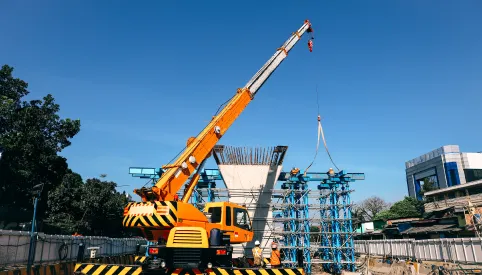
For this reason, a telescopic crane rental plan should consider more than lifting capacity and boom reach. Weather forecasts, site exposure, ground conditions, load characteristics and the planned lifting radius all need to be reviewed before work begins.
At Asian Crane Services, we consider equipment requirements along with actual site conditions when supporting lifting projects. Our approach focuses on suitable equipment, trained operators and proper planning so that weather-related risks can be addressed before they affect the work.
Weather greatly affects crane work. Wind can lift objects, rain causes slipperiness, and low light reduces visibility, complicating communication. Wind is usually minor, but at high reaches with heavy loads, it becomes a serious concern, so weather should be carefully assessed.
Key conditions to monitor include:
OSHA guidance also recommends adjusting crane operations for wind, ice and snow effects on stability and rated capacity.
Wind is crucial for lifting large, lightweight, or oddly shaped loads because it can cause the load to swing or rotate like a sail, increasing the effective radius and complicating load control.
Plan a telescopic crane rental considering load, boom configuration, and site conditions. There may be no limit on wind speed. Establish a wind-speed limit in accordance with the manufacturer's advice, the lift plan, and the risk-assessment analysis report.
| Weather Factor | Potential Effect on Lifting | Planning Response |
|---|---|---|
| Strong wind | Load swing and increased radius | Review wind limits and load exposure |
| Heavy rain | Reduced visibility and wet ground | Check visibility and ground stability |
| Thunderstorm | Lightning and unsafe working conditions | Suspend operations when required |
| Poor visibility | Communication and positioning issues | Improve signalling and reassess the lift |
| Waterlogged ground | Reduced support conditions | Recheck crane setup and outrigger support |
The load chart should always correspond to the crane's actual configuration. Do not operate the crane beyond its rated capacity.
Rain does more than make a worksite uncomfortable. Heavy rainfall can affect ground conditions, access routes and visibility. Water accumulation around the crane setup area may also require reassessing the support arrangement.
For a hydraulic telescopic crane, stable support is essential. Before lifting, the team should confirm the crane is positioned on suitable ground and that the outrigger arrangement suits the conditions.
Rain can also affect the lifting crew's efficiency. Communication may become harder, visibility may deteriorate, and access to the work area may become restricted.
Thunderstorms demand extra caution as lightning poses a danger near tall cranes. OSHA advises suspending lifts during storms and taking safety precautions around cranes.
A telescopic crane rental schedule should therefore include provisions for weather stoppages. The team should not wait until lightning is close before deciding what to do.
Before restarting operations after severe weather, check:
This makes restarting a controlled decision rather than assuming conditions have returned to normal.
Weather planning is also important when work at height involves a telescopic boom lift. Wind can affect the stability of elevated equipment, while rain can create slippery surfaces and reduce visibility.
Always follow the operating limits specified by the manufacturer. The work area should also be assessed for changing ground conditions, overhead hazards and safe access.
Telescopic boom lifts should not be treated as unaffected simply because they are being used for personnel access rather than material lifting. Elevated work can become more difficult when wind and visibility deteriorate.
When weather must be considered at planning, do this before mobilisation. High-reach lifting, external sites, or operations that can't be done indoors may be delayed.
A practical weather-aware schedule can include:
This approach allows a telescopic crane rental to be used more efficiently. Instead of losing an entire shift unexpectedly, the team can rearrange activities around the weather window.
A pre-lift inspection should check equipment and site conditions. A crane suitable during planning may need reassessment if weather or ground conditions change.
For a hydraulic telescopic crane, the team should verify:
Set up the crane on stable ground with outriggers deployed. Control the swing radius to keep personnel away from hazards.
Crane selection should consider the full lifting requirement, not capacity alone. Boom length, working radius, site access, ground conditions and weather exposure can all affect equipment suitability.
A telescopic crane rental may be appropriate where the project requires variable boom reach and mobility. However, the selected crane must still meet the required capacity at the actual working radius and configuration.
For high-reach access work, telescopic boom lifts can also be considered where their operating limits and site conditions match the task.
The selection should start with lift requirements and site conditions, not just the largest machine.
Weather-aware planning needs coordination among the project team, crane operator, and equipment provider. Load details, lifting radius, site access, and conditions should be available before mobilisation.
When arranging a telescopic crane rental, match the equipment to the actual lifting requirement. The team should also have access to trained operators and properly maintained machinery.
A hydraulic telescopic crane can provide the required reach and lifting capability for demanding applications, but safe operation still depends on correct setup, appropriate configuration and compliance with the applicable operating limits.
Telescopic boom lifts likewise require suitable operating conditions, competent operation and adherence to manufacturer requirements.
Weather is an important part of crane safety and project planning. Wind, rain, thunderstorms and changing ground conditions can all affect how lifting operations are performed. Consider these factors before the lift and monitor them while work is underway.
A strong plan combines the weather forecast with the crane's configuration, load characteristics, site conditions and manufacturer's operating requirements. It should also define when work must stop and what to check before operations resume.
Asian Crane Services supports lifting projects with equipment, trained operators, and rental solutions tailored to various needs. Our telescopic crane rentals are planned with site practicality, including high-reach telescopic boom lifts.
Contact our team to discuss the equipment requirements for your upcoming project.
