Construction cranes often look perfectly capable of lifting heavy loads into position, but their performance depends on something much less visible:
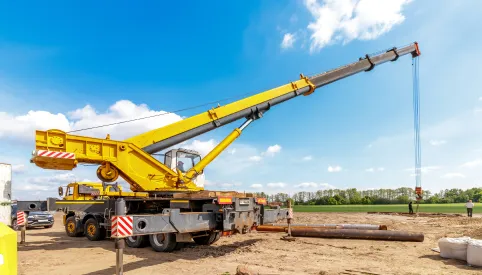
Construction cranes often look perfectly capable of lifting heavy loads into position, but their performance depends on something much less visible: the ground beneath them. At a busy construction site, soil type, drainage, slope, compaction, and surface stability can all influence how safely a crane can operate.
This becomes particularly important when arranging a telescopic crane rental for lifting steel structures, concrete components, machinery, or other heavy materials. A crane may have the required lifting capacity, but unsuitable ground conditions can still create operational challenges.
Understanding the relationship between ground conditions and crane performance helps contractors plan lifts more effectively, reduce delays, and maintain a safer worksite.
A crane transfers enormous loads through its outriggers or wheels onto a relatively small area of ground. During lifting, the pressure on these points can increase significantly, especially when the boom is extended or the load is positioned away from the crane's center.
If the soil cannot support the applied pressure, it may settle, shift, or fail. Even a small amount of movement can affect the crane's stability.
This is why ground assessment should be part of the planning process before bringing hydraulic telescopic crane onto a construction site. The objective is not simply to determine whether the crane can physically reach the location, but whether it can remain stable throughout the entire lifting operation.
Not all construction sites provide the same foundation for crane operations. Firm, well-compacted soil generally offers better support than loose fill, recently excavated ground, or waterlogged soil.
Clay-heavy ground, for example, can become soft when saturated. Sandy or loose soil may shift under concentrated loads. Recently backfilled areas can also settle unexpectedly if they have not been compacted properly.
Before scheduling a Telescopic Crane Rental, site teams should identify areas where soil conditions may be questionable. If necessary, ground improvement, compaction, steel plates, timber mats, or crane mats can be used to distribute the load over a larger area.
A crane does not necessarily need to operate on completely flat terrain, but significant slopes and uneven surfaces require careful planning.
An uneven setup can influence the crane's stability and may make it difficult to position the machine correctly. Even when a crane has advanced leveling or hydraulic systems, these features should not be treated as a substitute for proper ground preparation.
The crane should be positioned according to the manufacturer's operating requirements, with suitable attention given to slope, access, and the planned lifting radius.
This is particularly important for Hydraulic Crane Rental projects where the crane may need to reposition between multiple lifting points during the construction process.
Rain may seem like a temporary inconvenience, but its effect on crane operations can be much more significant.
Poor drainage can allow water to collect around the crane setup area, reducing soil strength and increasing the possibility of settlement. Construction sites near excavations, trenches, ponds, or recently disturbed ground require additional attention because water can change ground conditions quickly.
After heavy rainfall, the site should be reassessed rather than assuming that previously acceptable conditions remain unchanged.
Outriggers play a critical role in stabilizing many mobile telescopic cranes. However, simply extending the outriggers does not guarantee stability.
The pressure created by an outrigger can be substantial. If it is placed directly on weak or poorly compacted soil, the ground may deform beneath it.
Using appropriately sized support mats or load-spreading systems can help distribute the pressure. The exact solution should be determined based on the crane's configuration, expected loads, ground-bearing capacity, and site conditions.
This is one reason why experienced contractors discuss ground conditions with the crane rental provider before finalizing the equipment and lifting plan.
Ground conditions do not only determine where a crane can operate; they can also influence which crane is suitable for the job.
A hydraulic telescopic crane may be selected for its mobility, lifting flexibility, and ability to handle different construction applications. However, its configuration still needs to match the terrain, access limitations, load requirements, and available setup area.
For some projects, additional ground preparation may be more practical than changing equipment. In other situations, selecting a different crane configuration may make the operation more efficient.
The key is to evaluate the crane and the site as one lifting system rather than treating equipment selection as a separate decision.
Poor ground preparation can cause more than safety concerns. It can interrupt lifting schedules, restrict crane movement, damage surfaces, and require additional equipment or site work.
A proper pre-lift assessment helps identify these issues before the crane arrives. Contractors should consider soil stability, underground services, nearby excavations, drainage, access routes, setup locations, maximum load, lifting radius, and weather conditions.
When arranging a telescopic crane rental, sharing accurate site information with the rental company can also help the operator and lifting team prepare the right configuration and support equipment.
Crane capacity is only one part of a successful lifting operation. The ground supporting the equipment is equally important.
From soil strength and compaction to drainage, slopes, and outrigger support, ground conditions can directly influence the safety and efficiency of crane operations. Taking time to assess and prepare the site before lifting can prevent avoidable problems later.
Whether a project requires short-term Hydraulic Crane Rental or a larger lifting operation involving a hydraulic telescopic crane, proper ground assessment should always be treated as a fundamental part of the planning process. A well-prepared foundation gives the crane the stability it needs—and gives the entire construction team greater confidence throughout the lift.
