Construction cranes often look perfectly capable of lifting heavy loads into position, but their performance depends on something much less visible: the ground beneath them.
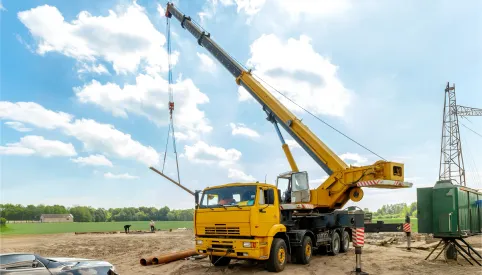
Heavy lifting projects rarely meet the same requirements. A construction site may need to place structural steel at significant heights, while an industrial facility may require machinery to be installed in a confined space. In each case, selecting the right boom length plays a major role in ensuring the lift is completed safely and efficiently. The wrong choice can lead to reduced lifting capacity, additional crane repositioning, project delays, and increased operational risks.
When businesses opt for a telescopic crane rental, they should look beyond the crane's lifting capacity. The boom length, working radius, site conditions, and project objectives all need careful consideration. At Asian Crane Services, we help clients assess these factors to recommend the right crane configuration for every lifting project, ensuring smooth operations from start to finish.
Boom length determines how far and how high a crane can safely lift a load. While this may sound straightforward, every extension of the boom changes the crane's lifting characteristics. As the boom extends, the crane gains greater reach but generally experiences a reduction in lifting capacity.
Selecting the correct boom length helps project teams:
For projects involving multiple lifting locations, the right boom length can also reduce equipment movement across the site, improving overall efficiency.
No single boom length works for every project. Several technical and site-specific factors influence the ideal configuration.
The first step is understanding how high the load needs to be placed. Installing rooftop equipment, bridge components, or elevated structural elements requires greater boom extension than ground-level lifting.
However, lifting higher does not automatically mean choosing the longest available boom. The crane must still operate within its rated lifting capacity.
Working radius refers to the horizontal distance between the crane's centre and the load. Even small increases in this distance can significantly affect lifting capacity.
For example, if the crane cannot be positioned close to the load because of site restrictions, a longer boom may be required. However, this should always be evaluated using the manufacturer's load charts.
The weight of the material being lifted remains one of the most critical considerations.
Heavy machinery, steel beams, concrete panels, generators, and prefabricated structures all require different lifting strategies. Selecting a boom solely based on reach without considering load weight can compromise safety.
A crane performs best when positioned on stable ground.
Soft soil, uneven terrain, recently excavated areas, or sloped surfaces may affect crane stability. In such situations, engineers may recommend different boom configurations or additional ground preparation before lifting begins.
Many project sites have limited working space due to nearby buildings, power lines, scaffolding, pipelines, or ongoing construction activities.
A properly planned telescopic crane rental considers these restrictions during the planning stage so the crane can operate safely without unnecessary adjustments.
One of the biggest misconceptions is that a longer boom automatically provides better performance.
Every crane follows a load chart that specifies how much weight it can safely lift at different boom lengths and working radii.
| Boom Configuration | Typical Performance |
|---|---|
| Short boom | Higher lifting capacity and greater stability |
| Medium boom | Balanced reach and lifting performance |
| Fully extended boom | Maximum reach with comparatively lower lifting capacity |
This is why experienced lifting professionals never select equipment based on boom length alone. They evaluate both the lifting height and the load requirements before making a recommendation.
A hydraulic telescopic crane is designed with multiple boom sections that extend and retract using hydraulic cylinders. This design allows operators to adjust the boom length quickly without dismantling or assembling additional components.
Compared to many other crane types, hydraulic telescopic cranes offer several operational advantages:
These features make hydraulic telescopic cranes widely used across industries including construction, infrastructure, manufacturing, logistics, energy, ports, and heavy engineering.
The simple answer is no.
Each lifting project presents unique challenges, and even two projects involving similar loads may require different boom lengths because of surrounding conditions.
For example:
Choosing equipment based on previous projects instead of current site conditions can lead to operational inefficiencies and unnecessary delays.
Before any lift begins, site conditions should be carefully assessed. Some common challenges include:
These factors influence where the crane can be positioned. If the crane must remain farther away from the lifting point, additional boom length may become necessary.
Professional site inspections help determine the safest and most efficient crane configuration before equipment reaches the project location.
Several issues arise because equipment selection is based on assumptions rather than proper calculations.
Some common mistakes include:
Avoiding these mistakes improves project safety while reducing downtime and unnecessary equipment costs.
Choosing the right boom length is about more than reaching greater heights. It directly impacts lifting safety, equipment performance, project timelines, and operational efficiency. Evaluating factors such as lift height, working radius, load weight, site conditions, and crane positioning ensures the selected crane can perform reliably throughout the project.
At Asian Crane Services , we understand that no two lifting projects are the same. We work closely with our clients to recommend the right hydraulic telescopic crane and telescopic crane rental solution based on their specific project requirements. From project planning to safe execution, our team is committed to delivering dependable lifting solutions that support complex industrial, infrastructure, and construction projects.
Whether you're handling a challenging installation or planning a large-scale construction project, we're here to help you choose the right crane configuration for safe and efficient lifting. Contact us today to discuss your requirements and find the ideal solution for your next project.
